Community guide
Palo Alto
Established neighborhoods, mid-century design, and a walkable university town.
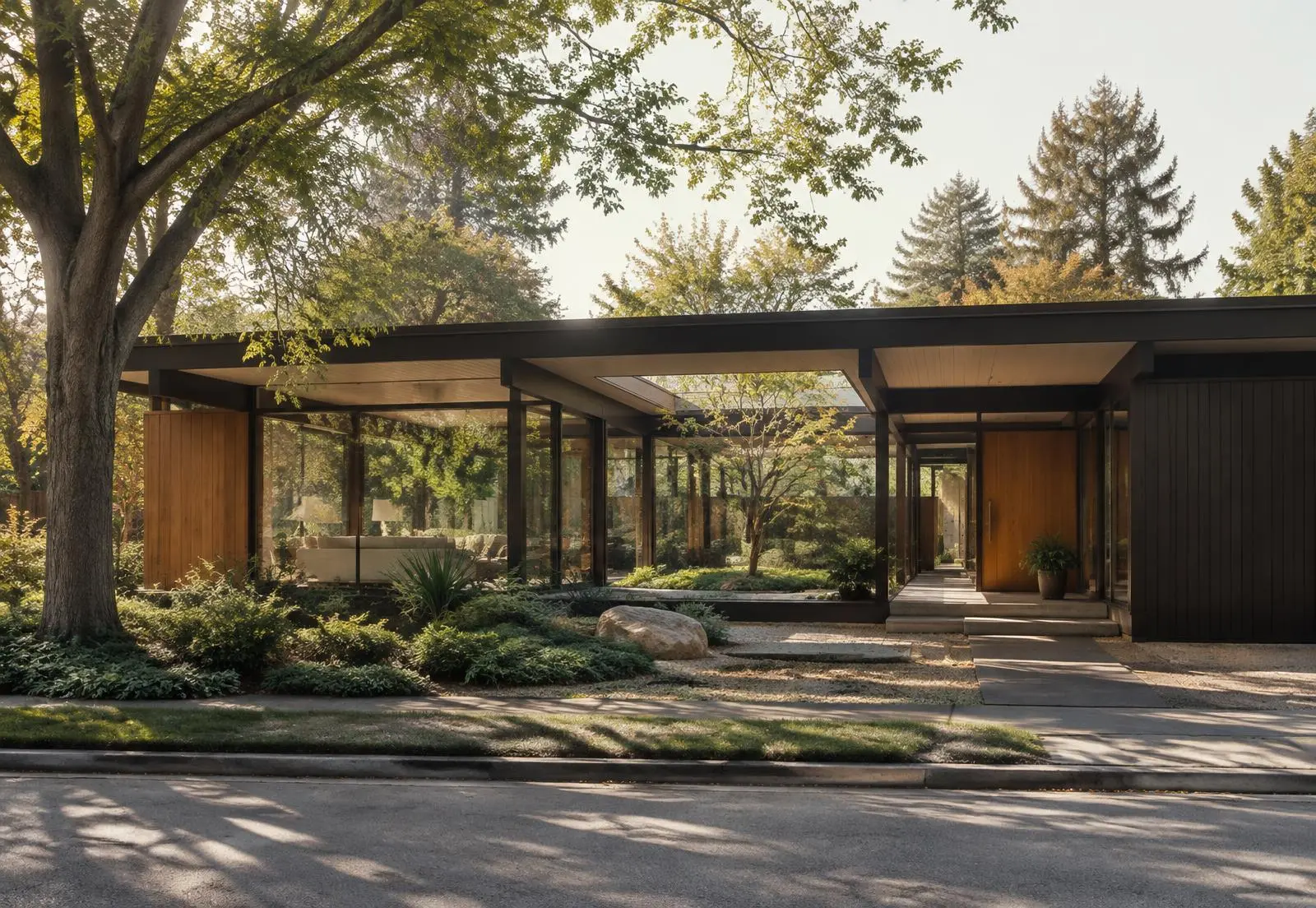
Palo Alto's residential neighborhoods range from the tree-lined streets of Old Palo Alto, Crescent Park and Professorville near downtown to the post-war tracts of Midtown and south Palo Alto. Two distinct commercial districts, University Avenue and California Avenue, anchor much of daily life, with Stanford University immediately to the west.
For owners and buyers, Palo Alto rewards close reading. Two homes a few blocks apart can differ meaningfully in lot size, zoning overlay, historic status and flood designation, and each of those affects value, renovation options and the right marketing approach.
Housing
Housing stock is varied. The northern neighborhoods include early twentieth-century homes on established lots. Much of central and south Palo Alto was built in the decades after World War II, including ranch homes and a substantial collection of Eichler homes. Older homes throughout the city have been replaced with new construction, and townhomes and condominiums are concentrated near downtown, California Avenue and the El Camino Real corridor.
Lot dimensions, orientation and zoning designations vary considerably, even within a single neighborhood. These details shape both current value and what a future owner can build.
Architecture
- Early twentieth century: Craftsman, Colonial Revival, Tudor and Spanish Revival homes are found in Old Palo Alto, Crescent Park and Professorville, which is a designated historic district.
- Mid-century modern: Eichler homes, with post-and-beam construction, walls of glass, atriums and radiant floor heating, define several south Palo Alto neighborhoods. Some Eichler tracts have adopted single-story overlay zoning.
- Contemporary: New construction frequently includes full basements, modern farmhouse and transitional exteriors, and highly specified interiors.
Property considerations
- Historic review: Some properties are listed on or eligible for local historic inventories, which can affect exterior changes.
- Single-story overlays: Certain neighborhoods restrict second stories. Confirm the zoning designation before assuming a property can be expanded vertically.
- Protected trees: The city regulates removal and work near protected trees, including many native oaks and redwoods. Tree locations can shape what is buildable on a lot.
- Flood designations: Areas near San Francisquito Creek and the Baylands carry flood zone designations that can affect insurance and construction requirements.
- Basement construction: New basements are common and are subject to groundwater and dewatering requirements during construction.
- Eichler systems: Original radiant heating, single-pane glazing and roofing in older Eichlers warrant specific inspection.
- Municipal utilities: Palo Alto operates its own city utilities, which is worth understanding when evaluating operating costs and electrification upgrades.
Every property should be evaluated against current city rules. We help clients identify which questions to ask the city, inspectors and design professionals early.
Local amenities
- University Avenue and California Avenue for dining, shops and services
- Stanford Shopping Center and the Stanford University campus
- Rinconada Park, Mitchell Park and the city library branches
- The Baylands Nature Preserve and Foothills Nature Preserve
- Caltrain stations at University Avenue, California Avenue and San Antonio
For sellers
Selling in Palo Alto
In Palo Alto, buyers often compare a property against a short list of alternatives across several neighborhoods. Pricing begins with an honest read of that competing set, including homes that are not yet on the market.
We help sellers decide where preparation will be noticed, typically in presentation, lighting and landscaping rather than major renovation, and how to document the property's zoning, permits and any historic status so buyers can act with confidence. For homes with development potential, we discuss whether the lot itself should be part of the marketing story.
For buyers
Buying in Palo Alto
Successful Palo Alto purchases tend to begin well before the right home appears. We help buyers set priorities by neighborhood, lot characteristics and architecture, so a decision can be made quickly when an opportunity arises.
Before an offer, we review disclosures with an eye to permits, overlays, tree constraints and flood designations, and we coordinate inspections suited to the home's age and construction. Offer strategy is built from what the seller is likely to value, not only price.
Market updates
For a current, sourced review of Palo Alto market conditions relevant to your property or search, request a conversation.
A private conversation
Considering a move in Palo Alto?
Whether you are preparing to sell, searching for the right home, or evaluating a property's potential, we start by understanding what you want to accomplish and the decisions ahead.